Most wholesale buyers who contact us for the first time share a similar situation: they have found tactical pants on Alibaba or through a trading company, placed an order, and run into problems — inconsistent sizing between batches, fabric that does not match the sample, or a supplier who goes quiet after payment.
These problems are not inevitable. They are usually the result of sourcing from the wrong type of supplier, or skipping steps in the evaluation process that would have identified the risk early.
This guide explains how to source tactical pants from a China manufacturer correctly — what to evaluate, what to specify before placing an order, and where most wholesale programs go wrong in the early stages.
Why China Remains the Primary Sourcing Base for Tactical Pants
The answer is not just cost — though cost matters. It is depth of manufacturing infrastructure. China’s garment industry has spent decades developing expertise in the specific fabrics, hardware, and construction methods that tactical apparel requires. That expertise is not easily replicated elsewhere at comparable scale.
For tactical pants specifically, the relevant supply chain — ripstop and Cordura fabric mills, YKK zipper distributors, reinforcement material suppliers — is concentrated in China. A manufacturer embedded in that supply chain has faster access to materials, more stable pricing, and better ability to maintain consistency across repeat orders than a supplier sourcing components internationally.
Frontergroup is based in Hanchuan, Hubei — a region with established textile and garment manufacturing infrastructure. Operating within this ecosystem since 1998 means direct access to material suppliers and production resources that support stable, long-term wholesale programs.
The Most Important Decision: Factory vs. Trading Company
This is the single decision that most affects long-term sourcing outcomes, and it is frequently misunderstood.
A trading company coordinates production through third-party factories. They offer wide product ranges, responsive sales teams, and competitive initial quotes. What they cannot offer is direct control over production. When quality problems occur — and they do — a trading company cannot intervene in the factory floor. They relay messages. The buyer waits.
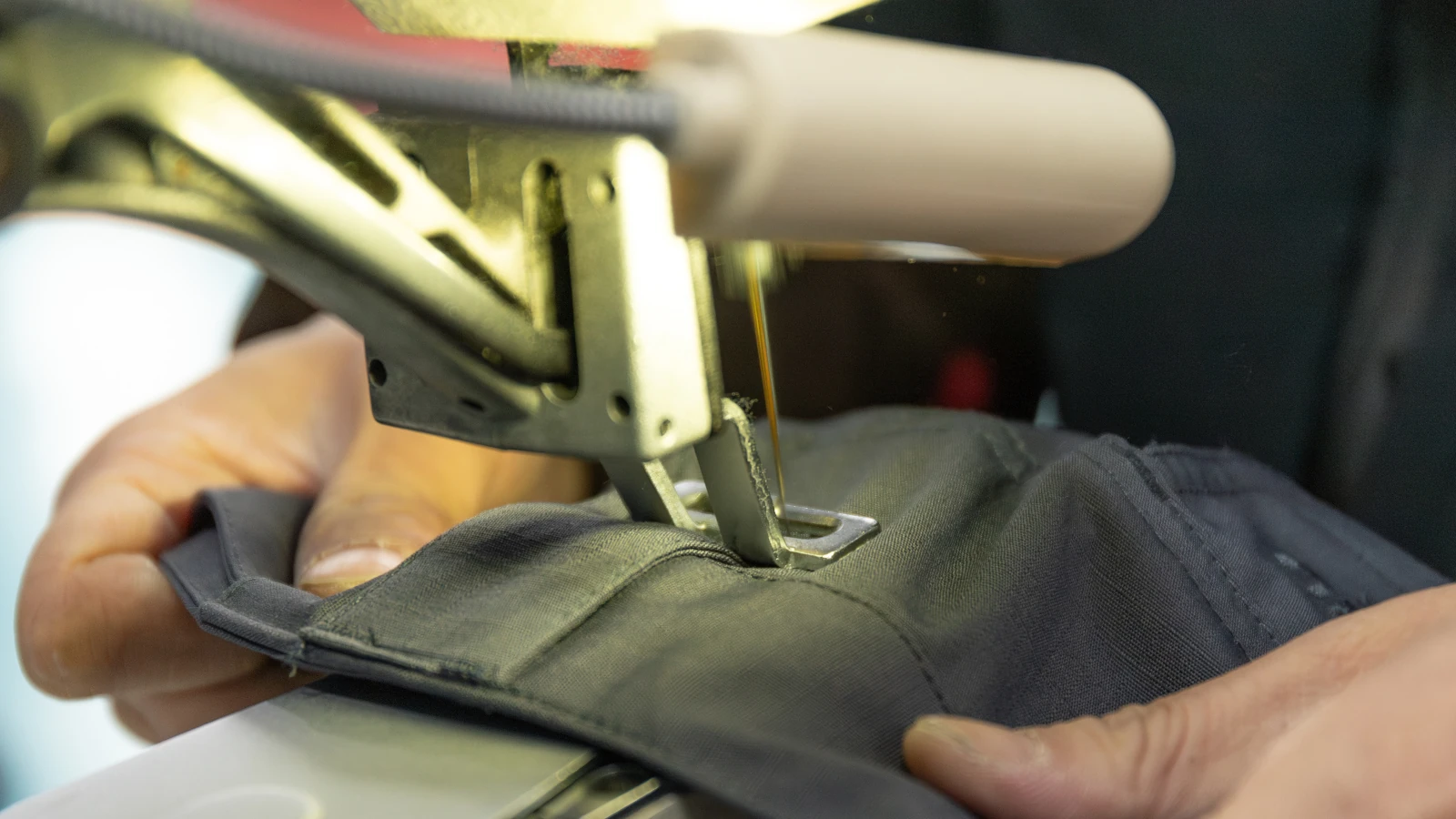
A factory manufactures directly. Material selection, construction standards, quality checks, and production scheduling are all managed in-house. When a buyer has a specification question or a quality concern, the person answering owns the production line.
For wholesale programs built on repeat orders — which tactical pants usually are — this distinction is critical. The consistency that makes reordering reliable comes from direct factory relationships, not from intermediaries.
A practical way to verify: ask the supplier for a factory visit (in-person or video), request photos of the production floor with the specific order in progress, and confirm that the person you communicate with can answer detailed technical questions about construction — not just pricing.
Fabric: The Decision That Affects Everything Else
Fabric choice determines unit cost, durability, reorder consistency, and how the finished product performs in real use. It is the most consequential specification decision in a tactical pants order, and it deserves more attention than most buyers give it.
Common Tactical Pants Fabrics
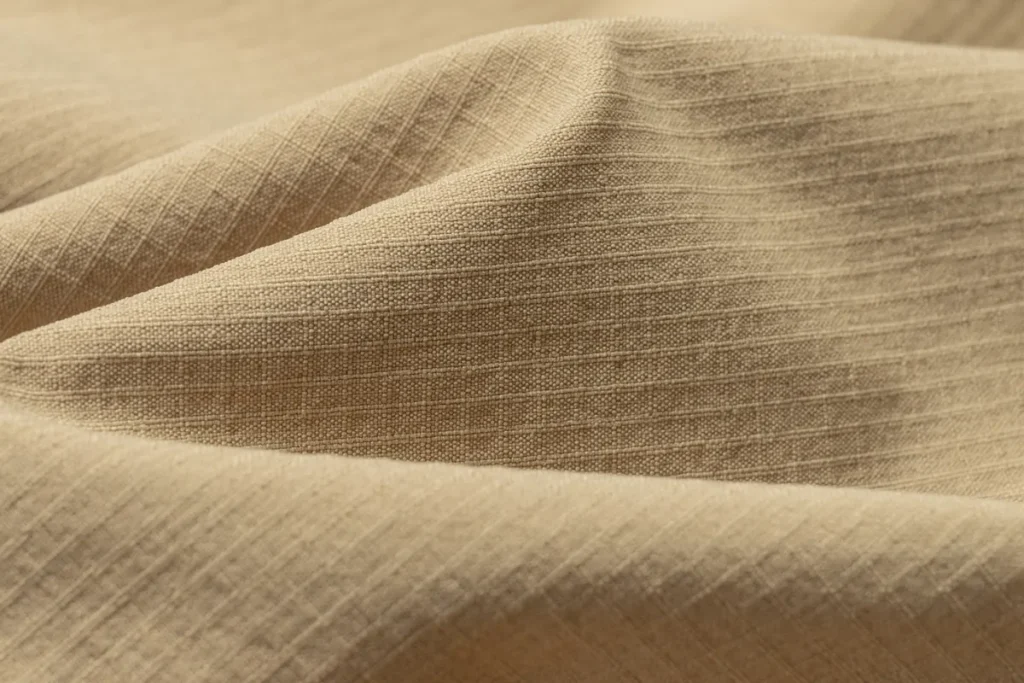
- 65/35 Poly-Cotton Ripstop — The most widely used base material for tactical pants. Combines the breathability of cotton with the durability of polyester. The ripstop weave resists tearing under stress. Well-suited for general wholesale programs and repeat orders due to stable supply and predictable cost.
- Nylon Ripstop — Lighter and more water-resistant than poly-cotton. Common in tactical pants designed for outdoor or field use. Slightly higher cost, but preferred where weight and moisture performance matter.
- Cordura — A high-tenacity nylon fabric used primarily in reinforcement areas (knees, seat, cargo pocket base). Not typically used as a full base material, but frequently specified as a panel in higher-performance tactical pants.
- Stretch Poly-Cotton Blends — Increasingly used in tactical pants designed for extended wear or active use. The addition of elastane (typically 2–5%) allows full range of motion without compromising structure. Adds cost but reduces buyer returns related to fit complaints.
For wholesale programs focused on repeat orders, fabric stability matters more than fabric innovation. A manufacturer with established relationships with specific fabric mills can guarantee consistent material specifications across production runs — something that is difficult to achieve when fabric is sourced opportunistically.
What to Specify Before Placing an Order
Vague specifications are the most reliable predictor of production problems. A manufacturer can only produce consistently to what is clearly defined. Buyers who skip this step tend to spend the back half of a production cycle managing revisions.
Fit and Sizing
Define fit (regular, slim, or relaxed), size range, and confirm that size charts align with your target market’s standards. US buyers should verify that waist, inseam, and rise measurements follow American sizing conventions, not international equivalents. A two-inch difference in a size chart does not show up until the product is in the hands of end buyers — and by then, it becomes a returns problem.
Construction Details
Tactical pants have more construction variables than most garment categories. The following should be explicitly specified:
- Cargo pocket layout, dimensions, and closure type (velcro, snap, or zip)
- Knee area: reinforced panel only, or pad pocket integration
- Crotch gusset: fabric type and gusset depth
- Waistband structure: fixed, internal elastic, or D-ring belt configuration
- Zipper specification: size, brand preference (YKK is standard for export-quality programs), and type
- Bartack and reinforcement placement at stress points
Each additional construction detail adds cost and development complexity. For first wholesale orders, a focused specification with proven construction elements performs better than a complex design that introduces production variables.
Color and Pattern
Specify solid colors using Pantone or RAL references. For camouflage patterns, confirm whether the pattern is standard (widely available in fabric mills) or proprietary. Custom camo development requires additional lead time and cost, and is rarely justified for a first wholesale order. Start with a standard pattern and customize once demand is established.
MOQ and Lead Time: Planning a Wholesale Program Realistically
Two questions dominate early conversations with wholesale buyers: how many pieces do I have to order, and how long will it take?
On MOQ: most large tactical apparel factories require 300–500 pieces per style to justify production setup costs. That is a reasonable threshold for a buyer with established demand — and a significant risk for a buyer testing a new product or market.
Frontergroup accepts orders from 20 pieces per style. That threshold exists specifically to allow wholesale buyers to run a real market test — with actual product in hand, not just samples — before committing to large inventory. A buyer testing three colorways at 20 pieces each can validate demand for under $2,000 in product cost, then scale the winning SKU on the next order.
On lead time: production typically runs 30–45 days after sample approval for standard orders. Complex customization or less common fabrics may extend this. Buyers should plan orders at least 8–10 weeks ahead of when product is needed on shelves — this allows time for sample review, any revisions, production, and shipping.
The buyers who run into lead time problems are almost always the ones who started sourcing too late. Building a 10–12 week buffer into your purchasing calendar is the simplest operational improvement most wholesale programs can make.
Stock Styles vs. Custom Development: A Two-Stage Approach
Most successful wholesale programs follow the same pattern: start with stock, move to custom.
Stock styles allow buyers to get product into the market quickly, with minimal development cost and faster lead times. The trade-off is that any other buyer can order the same style. For market testing — which is what most first wholesale orders really are — this trade-off is almost always worth making.
Once a style has demonstrated sell-through, custom development makes sense. OEM production allows buyers to adjust fit, add branded labels, modify construction details, and build a product that competitors cannot easily replicate. The investment in development is justified because there is already evidence of demand.
The mistake we see most often is buyers who skip stage one entirely — spending money on custom development before they know what sells — and then struggling to move inventory that was expensive to produce and has no proven market.
Common Mistakes When Sourcing Tactical Pants Wholesale
These mistakes appear consistently across first-time wholesale orders. Most are avoidable with basic process discipline.
- Choosing a supplier based on price alone. The lowest quote usually reflects a shortcut somewhere — in fabric quality, construction, quality control, or material consistency between batches. For tactical pants sold under your brand, a quality failure in the field reflects on you, not the factory.
- Ordering too many SKUs on the first order. Spreading inventory across too many colors or sizes before demand is known creates a difficult sell-through problem. Start narrow, validate, then expand.
- Not documenting specifications. A purchase order without detailed specs is not a specification. If the fabric weight, construction details, and size chart are not documented and confirmed in writing before production starts, there is no reliable basis for a quality dispute — or a consistent reorder.
- Over-customizing before demand is established. Custom development costs time and money upfront. Building a highly customized product before validating market demand is the most common cause of first-order write-offs in tactical apparel.
- Starting sourcing too late. A 30–45 day production lead time, plus shipping, plus any sample revision time, adds up quickly. Buyers who start the sourcing process 6 weeks before they need inventory are almost always disappointed with the outcome.
How Frontergroup Works with Wholesale Buyers
Frontergroup has manufactured outdoor and tactical apparel since 1998. Our 68,000㎡ production facility in Hanchuan, Hubei operates integrated production lines — cutting, sewing, finishing, and quality control are all managed in-house.
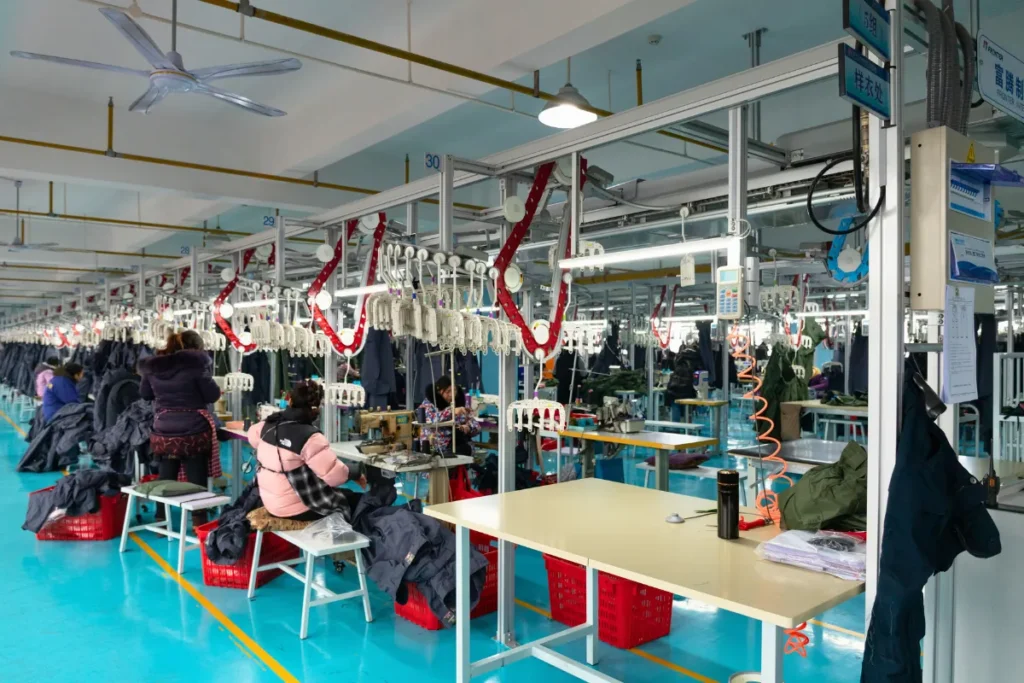
What that means practically for a wholesale buyer:
- MOQ from 20 pieces per style. This is a deliberate threshold, not a minimum we are trying to raise. It exists because we work with buyers at the market-testing stage, not just buyers who already have established volume. A small first order that goes well is worth more to us than a large first order that creates problems.
- Direct factory communication. When you send a WhatsApp message about a construction question or a production update, the person responding works in the factory. There is no sales intermediary between you and the production team.
- OEM capability for buyers ready to customize. Once your program has established demand, we support full OEM development — fit adjustments, custom labels, hardware specifications, and branded packaging. The same team that handled your first stock order manages the transition to custom production.
- Fabric consistency across reorders. Our material relationships are long-term. The fabric in your third reorder will match the fabric in your first order. This is not guaranteed when sourcing through trading companies that source materials opportunistically.
- Export experience for US, Canadian, and Australian buyers. We are familiar with sizing conventions, labeling requirements, and documentation standards for these markets. First-time buyers do not need to navigate compliance questions alone.
Start a Conversation About Your Tactical Pants Program
If you are evaluating manufacturers or ready to discuss a specific requirement, the most useful next step is a direct conversation — not a quote request form.
Send us a WhatsApp message with your product requirements, target market, and approximate order quantity. We will respond with specific fabric options, stock style references, and realistic pricing based on your situation — not a generic catalog.
Frequently Asked Questions
Q1: What is the minimum order quantity for tactical pants from Frontergroup?
A: We accept orders from 20 pieces per style. This allows wholesale buyers to test a product in their market before committing to larger inventory. There is no requirement to reach a higher volume to access factory-direct pricing.
Q2: What fabrics are available for tactical pants?
A: Our most common tactical pants fabrics are 65/35 poly-cotton ripstop, nylon ripstop, and stretch poly-cotton blends. Cordura panels are available for reinforcement areas. We can advise on the most appropriate fabric for your target market and price point based on your requirements.
Q3: How long does production take for a wholesale tactical pants order?
A: Standard production runs 30–45 days after sample approval. More complex customization or less common materials may extend this. We recommend planning your order at least 10 weeks ahead of when product is needed, including time for sample review and shipping.
Q4: Can I order stock styles first and move to custom OEM later?
A: Yes — this is the approach we recommend for most new wholesale programs. Starting with stock styles reduces upfront cost and development time, allowing you to validate demand before investing in customization. The transition to OEM development is straightforward once your program has established volume.
Q5: Is Frontergroup a factory or a trading company?
A: Frontergroup is a manufacturer. Our 68,000㎡ facility in Hanchuan, Hubei handles production in-house — cutting, sewing, finishing, and quality control are all managed by our own team. We do not outsource production to third-party factories.
Q6: Do you have experience exporting to the US, Canada, and Australia?
A: Yes. We work with wholesale buyers across these markets and are familiar with the sizing standards, labeling requirements, and export documentation each market requires. New buyers do not need to navigate these requirements without guidance.