Turning an outdoor apparel concept into a reliable, market-ready product requires more than basic manufacturing.
Design accuracy, material stability, production planning, and quality control all play a critical role in determining whether a project runs smoothly or encounters repeated revisions.
This is where a structured outdoor apparel OEM process becomes essential.
Outdoor apparel OEM is not simply about sewing garments. It is a complete manufacturing workflow that connects design evaluation, material sourcing, sampling, quality management, and large-scale production.
This article explains how professional OEM production works in real factory environments — from the first design sketch to mass production.
What Is Outdoor Apparel OEM?
Outdoor apparel OEM (Original Equipment Manufacturing) refers to producing garments strictly according to provided designs, specifications, and performance requirements.
The brand defines the product concept and positioning, while the factory focuses on execution, consistency, and scalability.
Compared with ready-made production models, OEM offers greater flexibility in fabric selection, construction details, and long-term product development.
For outdoor apparel projects that require stable quality and repeat production, OEM remains a widely adopted manufacturing approach.
Step 1: Design Concept & Technical Evaluation
Every OEM project begins with a design reference — a sketch, a tech pack, or an existing sample.
Before production starts, the design is reviewed from a technical perspective. This includes evaluating fabric availability, construction feasibility, performance expectations, and cost structure.
Early technical evaluation often determines whether a project progresses efficiently or requires multiple revisions later.
In many cases, minor adjustments at this stage help improve durability, fit, or production stability without altering the original design intent.
Step 2: Fabric Selection & Material Sourcing
Fabric selection directly affects performance, cost, and production reliability.
Outdoor apparel projects commonly involve materials such as waterproof fabrics, insulated layers, breathable linings, and recycled polyester or nylon.
Each option involves trade-offs between durability, comfort, sustainability, and lead time.
A structured sourcing process helps ensure that selected materials remain stable throughout bulk production and meet defined performance standards.
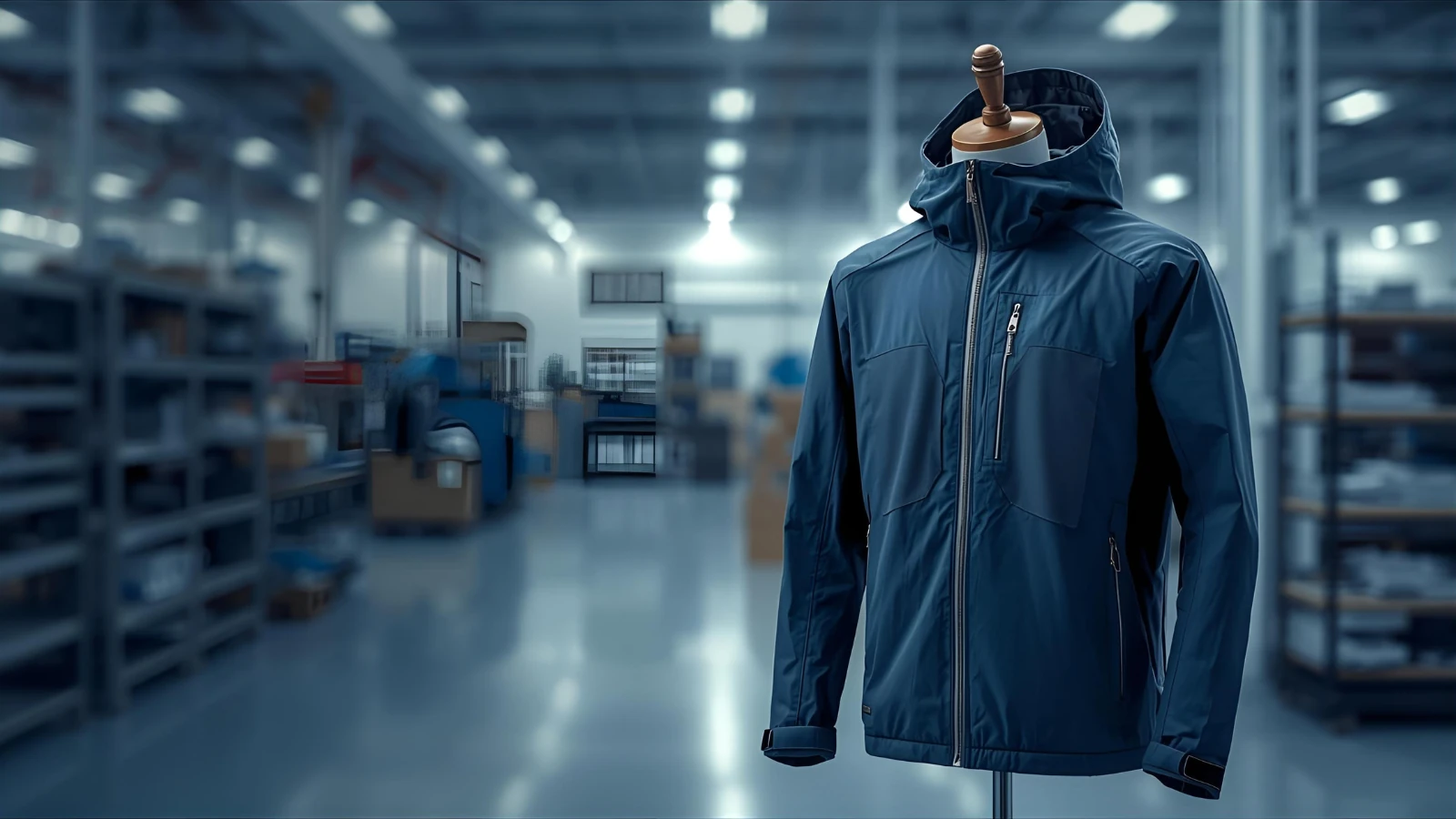
This OEM process is commonly applied across various outdoor apparel categories, including insulated and waterproof jackets.
Step 3: Sample Development & Fitting
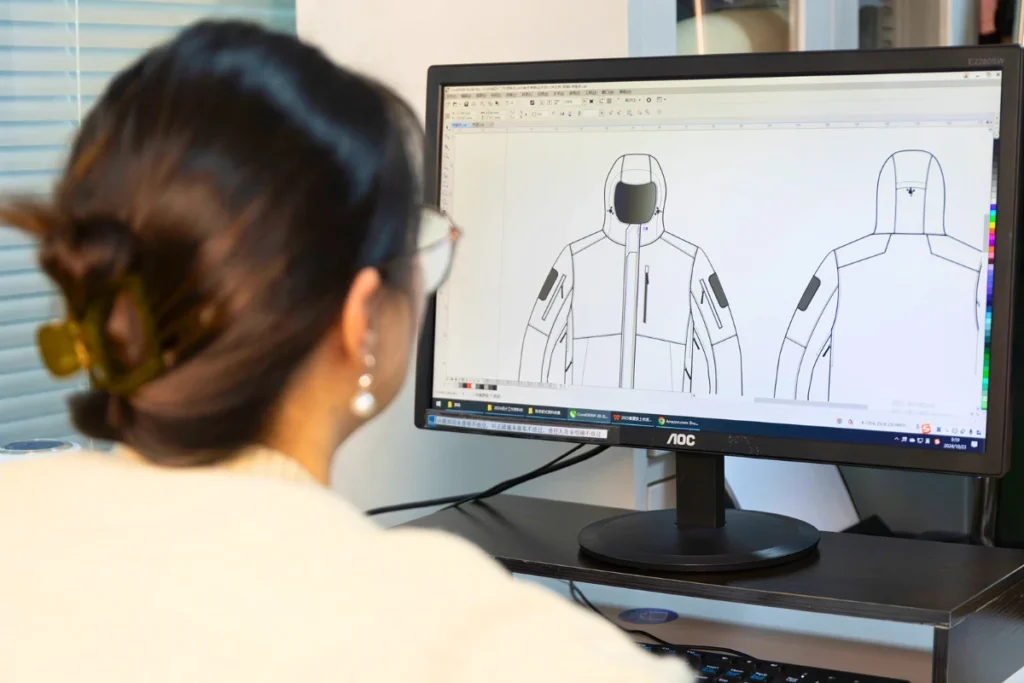
Once materials and construction details are confirmed, sample development begins.
Patterns are created, garments are assembled, and fit is adjusted through structured fitting and feedback.
Sample revisions are a normal part of outdoor apparel development, especially for performance garments with complex construction.
Clear documentation during this stage helps ensure that the approved sample accurately represents the final production version.
Step 4: Pre-Production Planning
After sample approval, attention shifts to production preparation.
This stage includes final material confirmation, production line planning, workflow scheduling, and quality standard alignment.
Well-structured pre-production planning reduces variability during mass production and supports consistent output across the entire order.
This preparation phase often distinguishes scalable manufacturing operations from smaller, less organized workshops.
Step 5: Mass Production & Quality Control
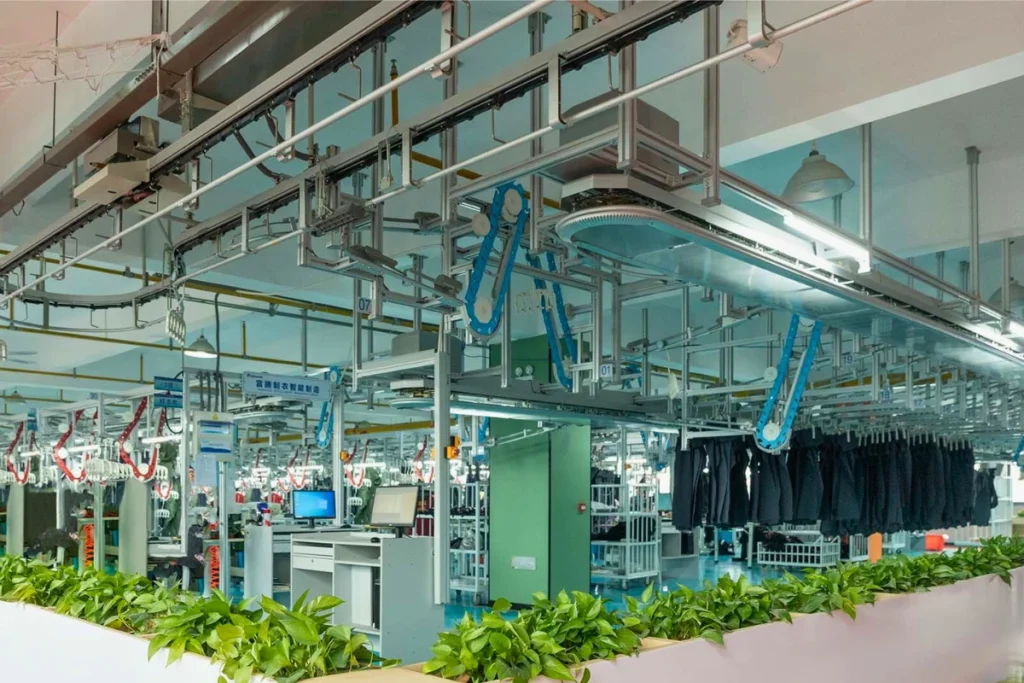
Mass production is the most critical phase of the clothing manufacturing process.
In professional outdoor apparel OEM production, quality control is integrated throughout manufacturing rather than applied only at the final stage.
This includes in-line inspections, monitoring of key construction points, and final checks before packing.
Consistent quality across large quantities depends on stable processes, trained operators, and systematic quality management.
Step 6: Packing, Shipping & Delivery
Once production is completed, garments move into packing and shipment preparation.
This stage typically involves folding, labeling, export packaging, and coordination with logistics partners.
Clear procedures and documentation help ensure that products are delivered safely and according to schedule.
Reliable delivery completes the OEM process and supports smoother downstream planning.
Common Challenges in Outdoor Apparel OEM
Outdoor apparel manufacturing can present challenges if processes are not well controlled.
Common issues include fabric delays, fit inconsistencies between samples and bulk production, communication gaps, and quality variations.
Structured workflows, clear documentation, and experienced technical teams significantly reduce these risks and help maintain long-term production stability.
Who Outdoor Apparel OEM Is Best Suited For
Outdoor apparel OEM is most effective for projects that require consistent quality, technical control, and scalable production.
It is commonly applied in brand collections, distributor programs, and long-term supply arrangements.
Projects that require very small quantities or immediate delivery may benefit from alternative sourcing models.
Clear alignment at the outset helps ensure efficient cooperation throughout the production cycle.
Why Work with Fronter Group
With more than 25 years of experience in functional and outdoor apparel manufacturing, Fronter Group supports OEM projects through structured workflows and stable production capacity.
Our manufacturing base covers 68,000㎡ and integrates modern production systems with defined quality management procedures.
From early development to mass production, the focus remains on consistency, transparency, and long-term cooperation.
Our structured OEM workflows support brands throughout the entire manufacturing cycle.
From Concept to Scalable Production
Outdoor apparel OEM is a process built on preparation, communication, and execution.
A well-managed OEM workflow reduces uncertainty, supports consistent quality, and allows products to move from concept to market with greater reliability.
For projects that require structured manufacturing and scalable production, a transparent OEM process makes a measurable difference.
For projects that require structured manufacturing and scalable production, our team can provide further clarification.
Frequently Asked Questions
Q1: What is the typical production timeline for outdoor apparel OEM?
A: Sampling usually takes 2–4 weeks. Bulk production typically requires 45–60 days after sample approval.
Q2: Can OEM production support custom materials and construction?
A: Yes. OEM production allows flexibility in fabrics, trims, construction methods, and branding details.
Q3: Is outdoor apparel OEM suitable for long-term supply programs?
A: OEM is commonly used for repeat production and long-term cooperation where consistency is required.